



Tractor Attachments

Tractors are incredibly versatile machines, capable of performing a wide range of tasks with the help of various attachments and implements. However, the terminology surrounding these add-ons can be confusing, leaving many tractor owners wondering about the differences between tractor attachments and tractor implements and which ones are best suited for their needs.
Differences Between Tractor Attachments and Implements
While there are no strict definitions, tractor attachments are generally considered supplementary devices that attach to the tractor itself, such as loaders, backhoes, or cab upgrades like stereos. Tractor Implements, on the other hand, are tools used for specific tasks and are usually connected to the tractor via the front, rear, or middle. Implements can change the function of the tractor, whereas attachments add capabilities without necessarily changing its primary function. For example, a loader attachment allows the tractor to scoop and move materials, while a tiller implement enables the tractor to aerate and prepare soil for planting. Ultimately, both tractor attachments and tractor implements expand the versatility and functionality, allowing it to perform a wider range of jobs more efficiently.
How to Choose the Right Attachment for Your Tractor
When selecting the right attachment for your tractor, consider the specific tasks you need to accomplish and the size and capabilities of your tractor. Ensure the attachment is compatible with your tractor's horsepower range, three-point hitch category, and front-end loader series if applicable. Measure your tractor's rear wheelbase and the width between the loader arms to determine the appropriate attachment size that won't extend beyond these dimensions. Think about the types of projects you'll be undertaking, such as landscaping, gardening, livestock management, or snow removal, and choose attachments designed for those applications. Evaluate your budget and storage space as well. Consult with a knowledgeable dealer or manufacturer representative to get advice on the best attachment or implements for your specific tractor model and intended uses.
Popular Tractor Attachments and Their Uses
Here are some of the most popular and useful tractor attachments or tractor implements and their applications:
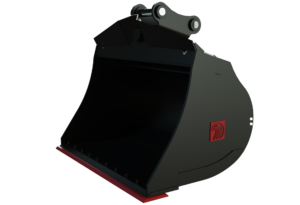
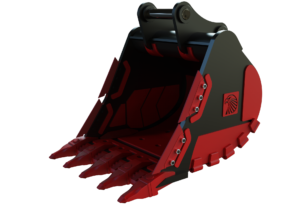
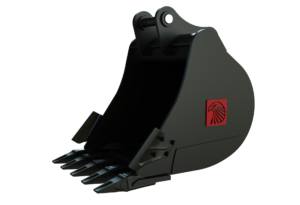
- Loaders: Consisting of hydraulic arms and various front-end attachments like buckets, forks, and grapples, loaders are highly versatile for scooping, digging, and moving materials.
- Mowers: Tractor mowers enable precise grass cutting and efficient maintenance of large land areas.
- Plows: Used for breaking up hard ground and rolling grass to serve as fertilizer for future crops.
- Cultivators: These attachments allow tractors to till soil on either side of plant beds, saving time in cultivation.
- Backhoes: Attaching a backhoe turns your tractor into an excavator, useful for digging holes, trenches, and foundations.
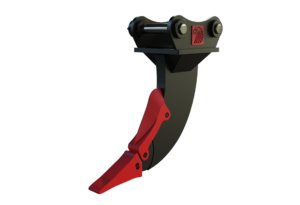
- Box blades: Fitted with scarifying teeth, a box blade helps break up hardened soil and level uneven ground.
- Hay balers: These attachments roll mowed hay into bales, wrapping them with twine or net.
- Snow blowers and pushers: Invaluable for clearing snow from driveways and land, snow blowers and pushers make quick work of winter weather.
With such a wide array of attachments available, tractors can be adapted to handle everything from farming and landscaping to construction and snow removal, making them indispensable machines for property owners.
Best Tractor Grapple Attachments
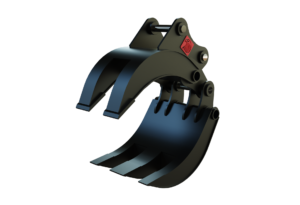
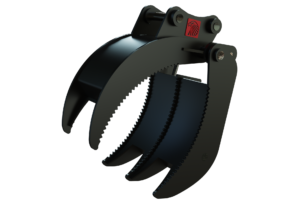
are incredibly versatile tools for grabbing and moving awkwardly shaped objects. Some of the best grapple options for tractors include:
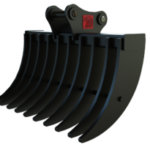
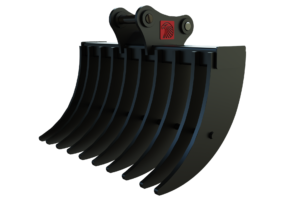
- Root rake grapples: These flat-profile grapples with ripper teeth are ideal for clearing brush, removing roots, and scooping up rocks or debris. The open bottom allows soil to fall through.
- Bucket grapples: Featuring an L-shaped jaw that forms a bucket, these grapples are perfect for securely grabbing logs, brush piles, hay bales, and more.
- Brush grapples: Designed for tractors under 100 HP, brush grapples with Hardox 450 steel teeth can easily remove underbrush and transport logs.
When choosing a grapple, consider your tractor's lift capacity, horsepower, and hydraulic system pressure. Grapples are commonly used for moving logs, clearing overgrowth, removing roots, handling debris, transporting hay bales and fence posts, and much more. With the right grapple attachment, your tractor can tackle an impressive range of challenging tasks around the property.
So how did the classical Latin become so incoherent? According to McClintock, a 15th century typesetter likely scrambled part of Cicero’s De Finibus in order to provide placeholder text to mockup various fonts for a type specimen book. It’s difficult to find examples of lorem ipsum in use before Letraset made it popular as a dummy text in the 1960s, although McClintock says he remembers coming across the lorem ipsum passage in a book of old metal type samples. So far he hasn’t relocated where he once saw the passage, but the popularity of Cicero in the 15th century supports the theory that the filler text has been used for centuries.
Remixing a Classics Interpreting Nonsense
And anyways, as Cecil Adams reasoned, “[Do you really] think graphic arts supply houses were hiring classics scholars in the 1960s?” Perhaps. But it seems reasonable to imagine that there was a version in use far before the age of Letraset.
As an alternative theory, (and because Latin scholars do this sort of thing) someone tracked down a 1914 Latin edition of De Finibus which challenges McClintock’s 15th century claims and suggests that the dawn of lorem ipsum was as recent as the 20th century. The 1914 Loeb Classical Library Edition ran out of room on page 34 for the Latin phrase “dolorem ipsum” (sorrow in itself). Thus, the truncated phrase leaves one page dangling with.